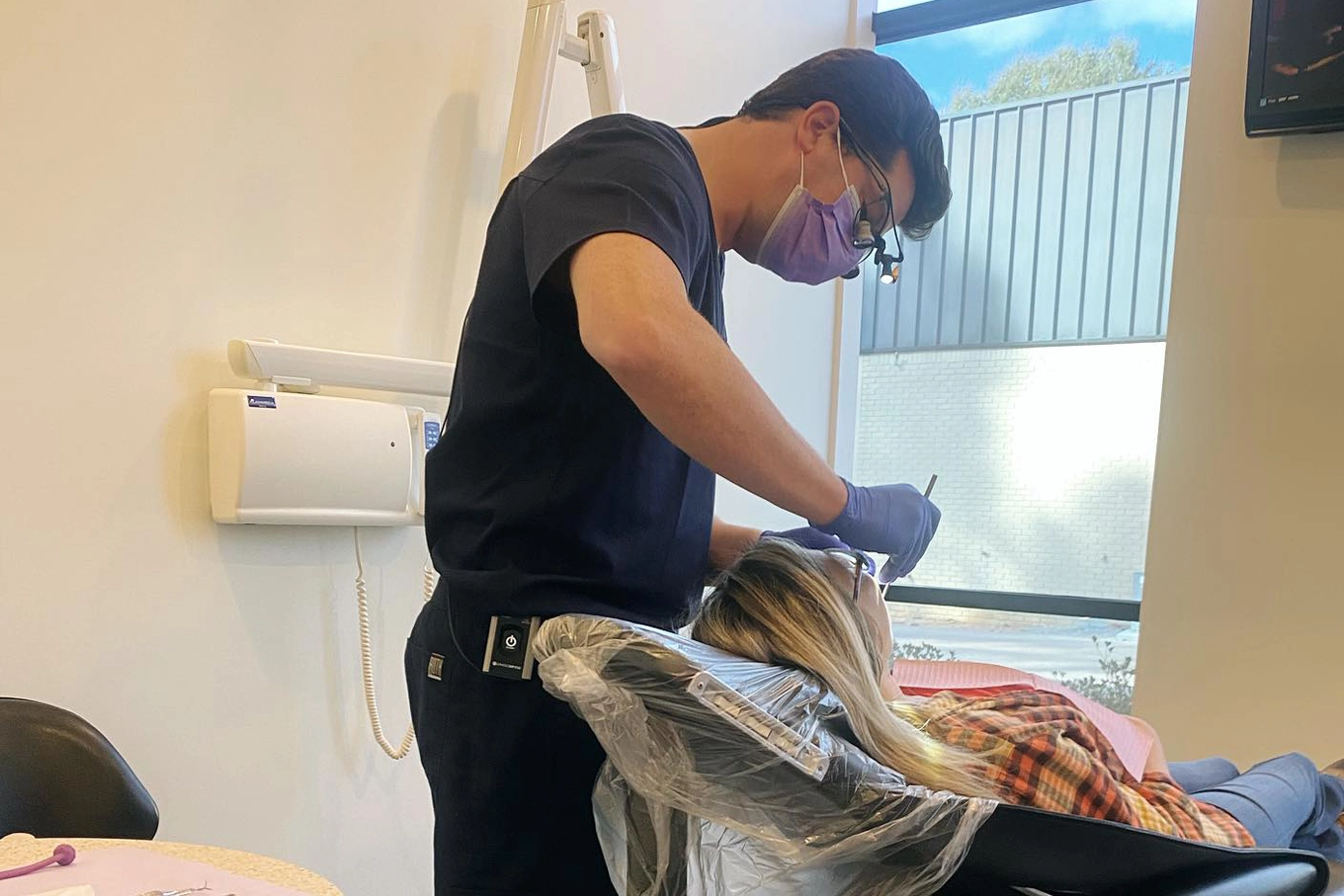





Your teeth often send quiet signals long before pain arrives. Knowing the silent tooth warning signs your dentist wants you to notice in New Albany could save you from costly, complex procedures later. At Mercier Dental, Dr. Marc Mercier sees patients every week who ignored small symptoms for months. Catching these signs early makes treatment faster, simpler, and far less stressful.
Many New Albany residents brush twice daily and feel confident about their oral health. But silent warning signs can develop even in people with good hygiene habits. This guide will help you recognize what to watch for before a minor issue becomes a major one.
Warning Sign 1: Tooth Sensitivity in New Albany Patients
Does a sip of hot coffee or a bite of ice cream make you wince? Tooth sensitivity is one of the most overlooked early warning signs. Many people dismiss it as normal, but it rarely is. Sensitivity often signals enamel erosion, a cracked tooth, or early-stage gum recession.
Enamel protects the inner layers of your teeth. Once it wears down, nerves become exposed to temperature changes. This triggers that sharp, fleeting pain you may already recognize. Left untreated, enamel erosion can progress to decay or structural damage requiring a crown.
If sensitivity affects one specific tooth, that could indicate a crack or cavity. Sensitivity across multiple teeth may point to enamel loss or grinding habits. Either way, it deserves professional attention, not just sensitivity toothpaste and hope.
Warning Sign 2: Bleeding Gums Are Never Normal
A little blood when you floss might seem harmless. Most people assume they just flossed too aggressively. But bleeding gums are one of the clearest early warning signs of gum disease. Healthy gum tissue does not bleed during normal brushing or flossing.
Gingivitis, the earliest stage of gum disease, causes inflammation and bleeding. At this stage, the condition is completely reversible with professional cleaning and improved home care. If gingivitis is ignored, it advances to periodontitis, a more serious infection that damages bone and tissue.
- Gums that bleed regularly need professional evaluation
- Red, swollen, or tender gums are early gum disease indicators
- Bad breath that persists may accompany gum inflammation
- Gum recession exposes tooth roots and increases sensitivity
- Early treatment prevents bone loss and tooth loss
Our dentist recommends scheduling a cleaning appointment if you notice any bleeding. A professional cleaning removes tartar buildup that brushing simply cannot reach. Early intervention here is one of the most impactful things you can do for your long-term oral health.
Warning Sign 3: Dark Spots, Stains, or Visible Pits on Teeth
A dark spot on your tooth is not always just a surface stain. Dark or brown discoloration can indicate early decay forming beneath the enamel. Patients in New Albany sometimes mistake these spots for coffee or tea stains and ignore them entirely. That delay can allow a small cavity to grow into a large one.
Visible pits or rough patches on the chewing surface are another red flag. These depressions collect bacteria and food debris. Over time, that buildup accelerates decay in an already vulnerable area. A simple filling placed early is far preferable to a root canal or extraction later.
White spots on teeth can also signal early demineralization. This happens before a cavity fully forms. At this stage, fluoride treatments and dietary changes can sometimes reverse the process. That window of opportunity closes quickly if you wait too long.
If you notice any discoloration or texture changes on your teeth, schedule an exam with Dr. Mercier. He uses diagnostic tools to distinguish surface staining from structural decay. Identifying the difference early keeps your treatment options broad and your costs low.
Warning Sign 4: Jaw Pain, Clicking, or Teeth Grinding
Do you wake up with a sore jaw or headache? Does your jaw click or pop when you open your mouth wide? These symptoms often point to bruxism (teeth grinding) or temporomandibular joint (TMJ) dysfunction. Both conditions silently damage your teeth and jaw over months or years.
Grinding wears down enamel faster than almost any other habit. It can flatten the biting surfaces of your teeth and cause chips or cracks. Many grinders do it exclusively during sleep and have no idea it is happening. A dentist, however, can spot the wear patterns immediately during a routine exam.
- Flattened or chipped teeth may indicate nighttime grinding
- Jaw soreness upon waking is a common bruxism symptom
- Clicking or locking of the jaw suggests TMJ involvement
- Headaches, especially in the morning, can be grinding-related
- A custom nightguard from Mercier Dental protects teeth while you sleep
Warning Sign 5: Changes in Your Smile’s Appearance
Notice your teeth looking shorter, more yellow, or slightly shifted? Changes in your smile’s appearance are worth discussing with your dentist. These shifts can reflect underlying structural or health issues. They are not simply cosmetic concerns to dismiss.
Teeth that appear shorter may be wearing down due to grinding or acid erosion. Yellowing that goes beyond surface staining can signal thinning enamel exposing the darker dentin beneath. Slight spacing or shifting of teeth can indicate bone loss from gum disease. Each of these changes tells a story worth reading early.
Patients interested in restoring their smile after damage has occurred often explore Cosmetic Dentistry options. Treatments like veneers, bonding, and whitening can address appearance concerns alongside any underlying health issues. Our dentist always ensures the health foundation is solid before pursuing cosmetic enhancements.
Do not wait until your smile concerns you every time you look in the mirror. Early conversations mean more options and simpler solutions. A brief exam can give you a clear picture of what is happening and what can be done.
Why Early Detection Matters for New Albany Patients
Every one of these warning signs shares a common thread: they are easiest to treat when caught early. A small cavity requires a filling. A neglected cavity may require a crown, root canal, or extraction. The difference is often just a matter of months and a single dental visit.
Preventive care is designed to catch these issues before they escalate. Routine cleanings and exams give an opportunity to identify problems while treatment is still simple. Patients who come in consistently tend to need far less complex care over time.
Think of your dental visits as a health investment, not just a routine chore. The information you receive at each visit empowers you to protect your smile between appointments. Education and early action are the most powerful tools in long-term dental health.
If any of the five warning signs described above sound familiar, do not wait for pain to confirm your concern. Pain often arrives late in the process. By that point, treatment is typically more involved than it would have been earlier. Trust the quiet signals your body sends and act on them promptly. Book Now to schedule your appointment with our team.
Frequently Asked Questions
How often should I visit Mercier Dental to catch these warning signs early?
Dr. Marc Mercier recommends most patients visit every six months for a routine cleaning and exam. Patients with a history of gum disease or frequent cavities may benefit from more frequent visits. Regular appointments allow Dr. Mercier to monitor changes over time and catch problems in their earliest stages.
Is tooth sensitivity always a sign of a serious problem?
Not always, but it should never be dismissed without evaluation. Sensitivity can range from mild enamel wear to a cracked tooth or early decay. A quick exam at Mercier Dental can identify the cause and recommend the right level of treatment before the issue progresses.
Can bleeding gums go away on their own without treatment?
Bleeding gums caused by early gingivitis can sometimes improve with better brushing and flossing habits. However, professional cleaning is usually necessary to remove tartar that home care cannot address. If bleeding persists for more than two weeks, schedule an appointment to rule out advancing gum disease.
What happens if I ignore a dark spot on my tooth?
A dark spot that indicates early decay will continue to grow if left untreated. Decay does not resolve on its own — it progresses deeper into the tooth structure over time. What begins as a simple filling can become a root canal or extraction if ignored long enough. Early treatment is always the better outcome.
Does Mercier Dental treat both the health issue and the cosmetic concern at the same time?
Yes. Dr. Mercier takes a comprehensive approach that addresses both function and appearance. He evaluates the underlying health of your teeth first, then discusses cosmetic options that complement your treatment. New Albany patients appreciate having both concerns handled in one trusted practice.